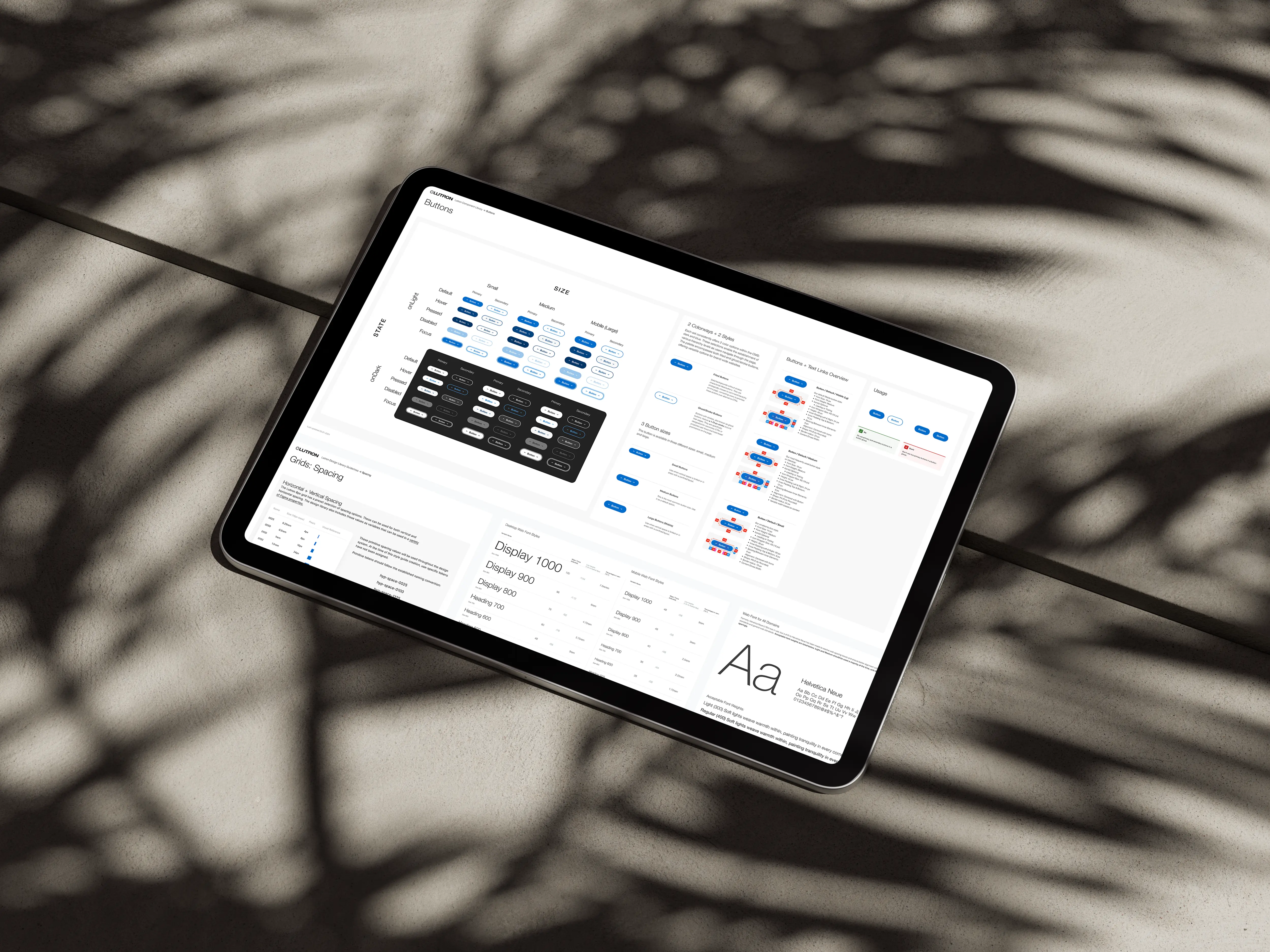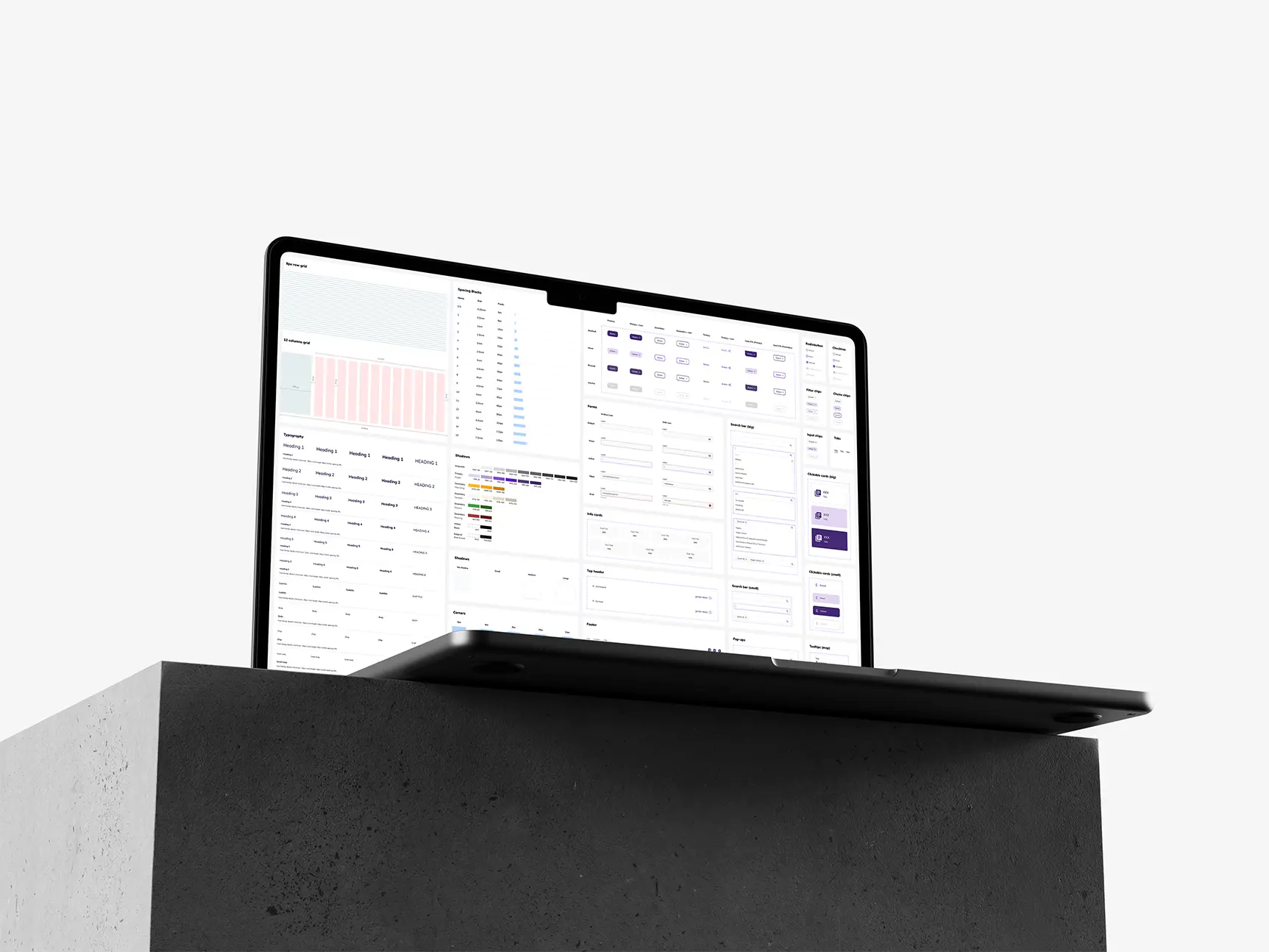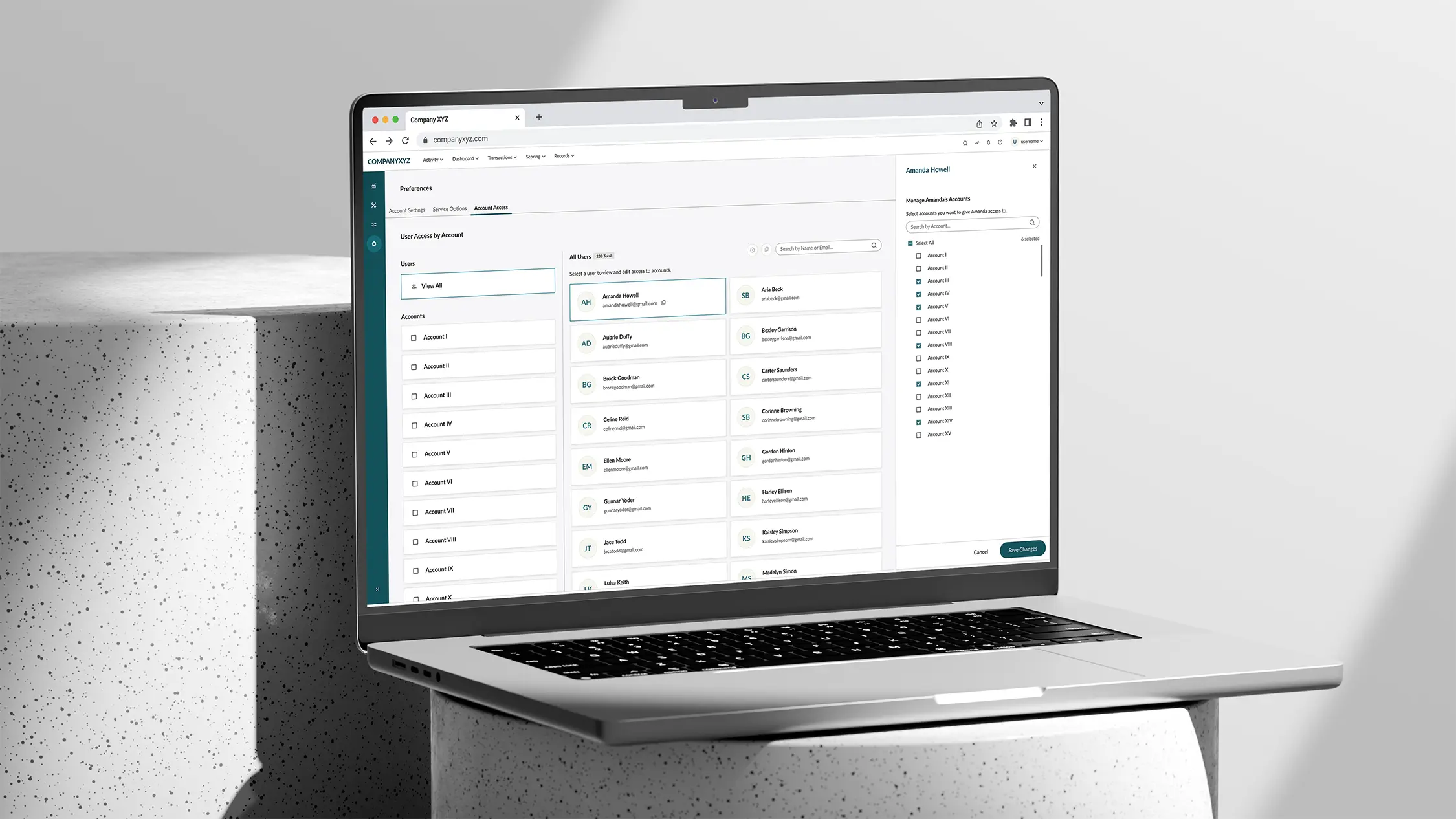
Chatham Financial cover image showing access management prototype

Redesigning financial workflows for security and clarity

During my internship at a global financial services company, I worked to modernize how internal teams managed and delivered client documents. Security and compliance were critical for this three-month design phase.

My role evolved from creating service blueprints to owning the access management prototype. I collaborated with a UX researcher, senior designer, developers, and subject matter experts across the project.

Due to NDA (Non-Disclosure Agreement), all sensitive data has been blurred or replaced, and parts of the interface were redesigned to maintain confidentiality.

Duration
3 months
My role
UX & service design
Client
Global B2B financial firm

Strengthen controls and modernize a manual workflow

Stakeholders approached our team with a clear concern:
A sensitive internal workflow for preparing financial documents was highly manual and difficult to oversee.
They wanted more confidence that the process aligned with internal control expectations and could stand up to external scrutiny.

What we uncovered about how the work actually flowed

Through interviews and observation sessions with subject‑matter experts and internal team members, we learned that the high‑level compliance concern was rooted in a few concrete process issues:
The process spanned multiple tools, making it hard for managers to track what was sent, when and by whom
There were no clear accountability checkpoints or systematized document organization
Documents required peer review before client delivery, but the manual request process made it easy to miss during high-volume periods

How we approached it

Narrowing scope to high‑impact steps

With only three months for design and a complex domain, the team decided not to move the entire workflow into the platform at once. Instead, we focused on:
1.
Centralizing document organization
2.
Making it clear who uploaded what and when
3.
Built-in document quality checkpoint before delivery
This approach delivered meaningful improvements in oversight while laying the groundwork for a broader migration.

Front‑loading research and modeling

We spent roughly half the design timeline (1.5 of 3 months) on research and collaborative mapping with subject matter experts and internal teams. This ensured:
The service blueprint accurately reflected the real process
Problem statements and success criteria were aligned across design, engineering and stakeholders
Later design decisions were grounded in real edge cases and constraints

Investing in research synthesis and shared artifacts

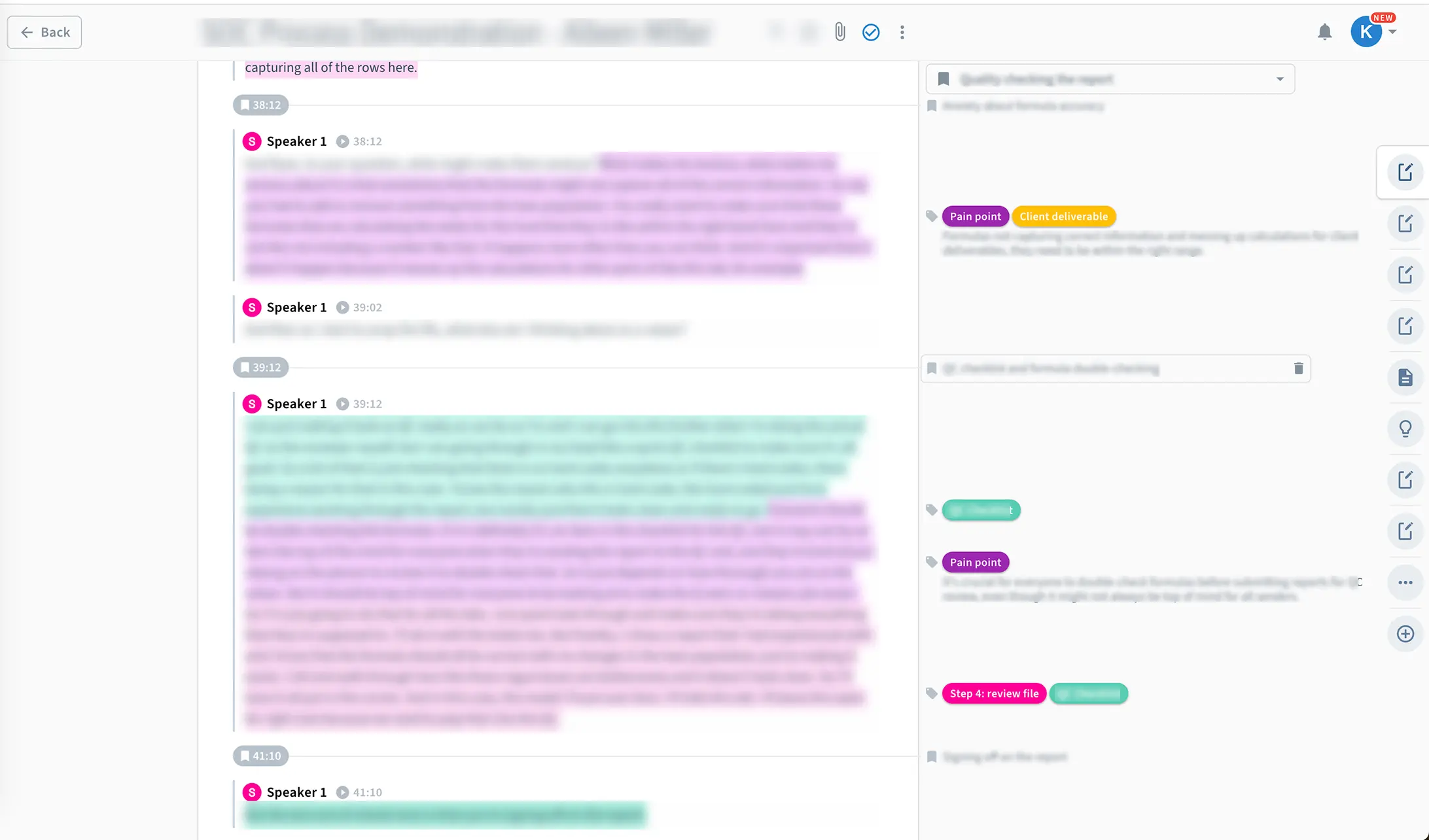
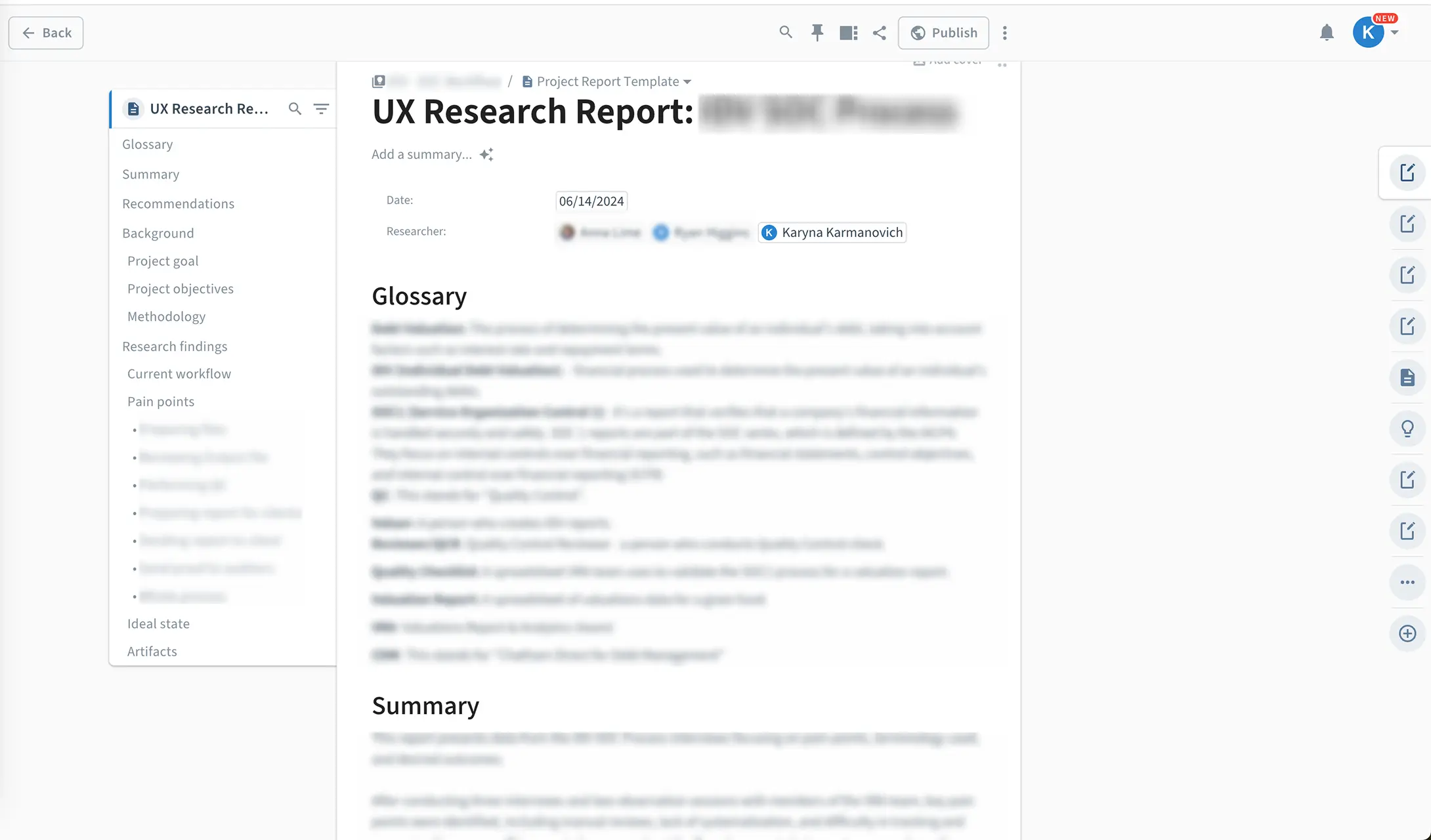
I analyzed and synthesized interview and observation notes with subject‑matter experts using a research repository tool and turned them into a UX research report.
Having a single, structured report helped align designers, developers and stakeholders on what we had learned and where to focus.
Condens app interface showing synthesis of user and stakeholder interview notes
Synthesizing user and stakeholder interviews in the Condens app
Condens app interface showing UX research report
UX research report summarizing key findings and insights

Blueprinting for speed and clarity

This was my first service blueprint and the team needed it early. I optimized for:
Speed
Iterating quickly with subject‑matter experts to confirm steps and avoid rework
Clarity
Asking experienced designers for feedback to make sure a complex service could be understood at a glance
This made the complex domain easier to understand and gave the team a common foundation for decision-making.
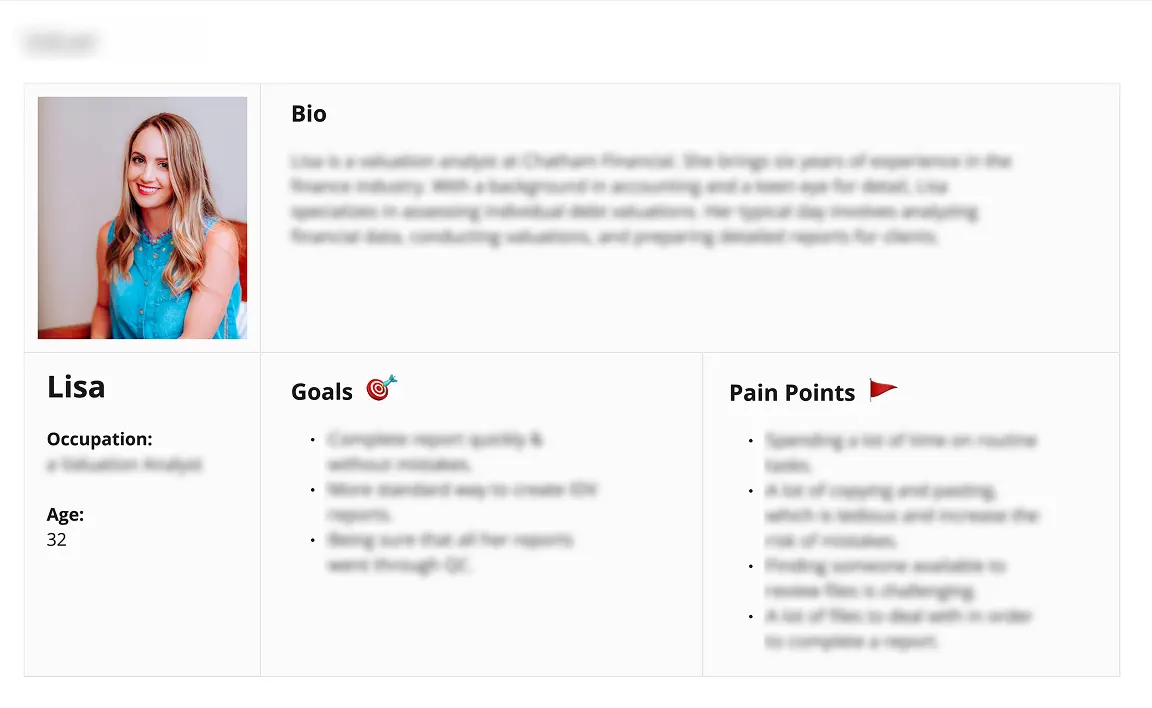
Primary user persona document blurred for confidentiality, representing core audience needs
Primary persona
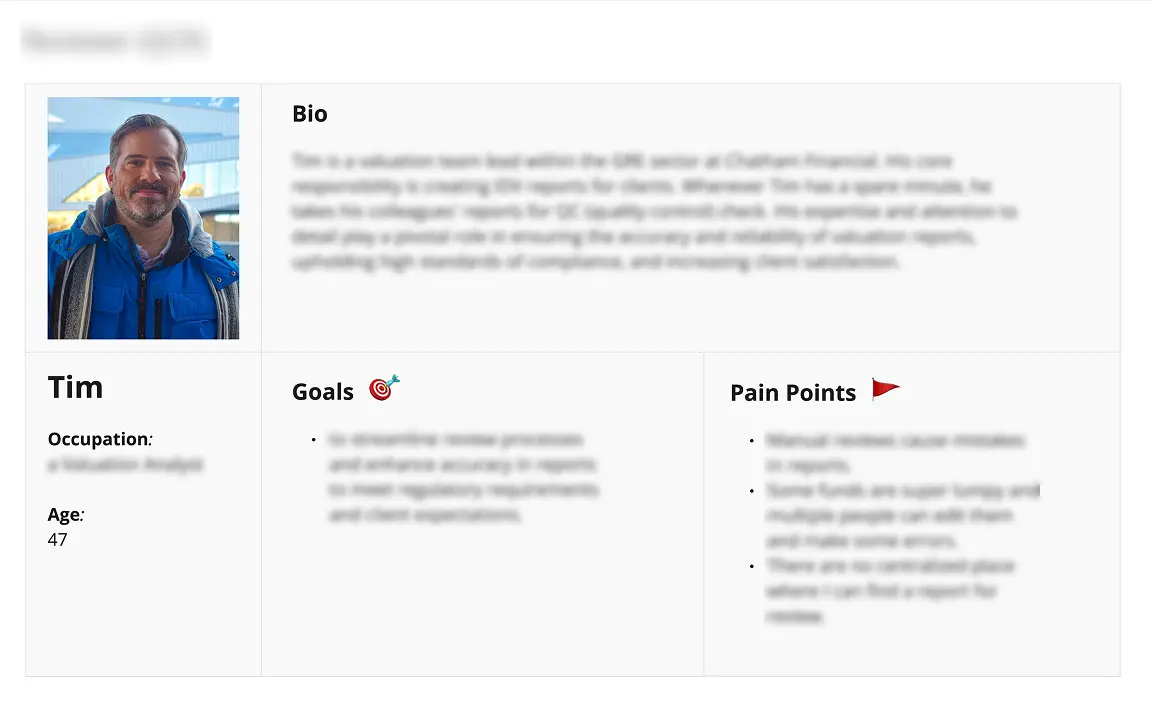
Secondary user persona document blurred for confidentiality, representing additional audience segment
Supportive persona
Blurred workflow diagram used in project to illustrate overall process steps
Workflow diagram
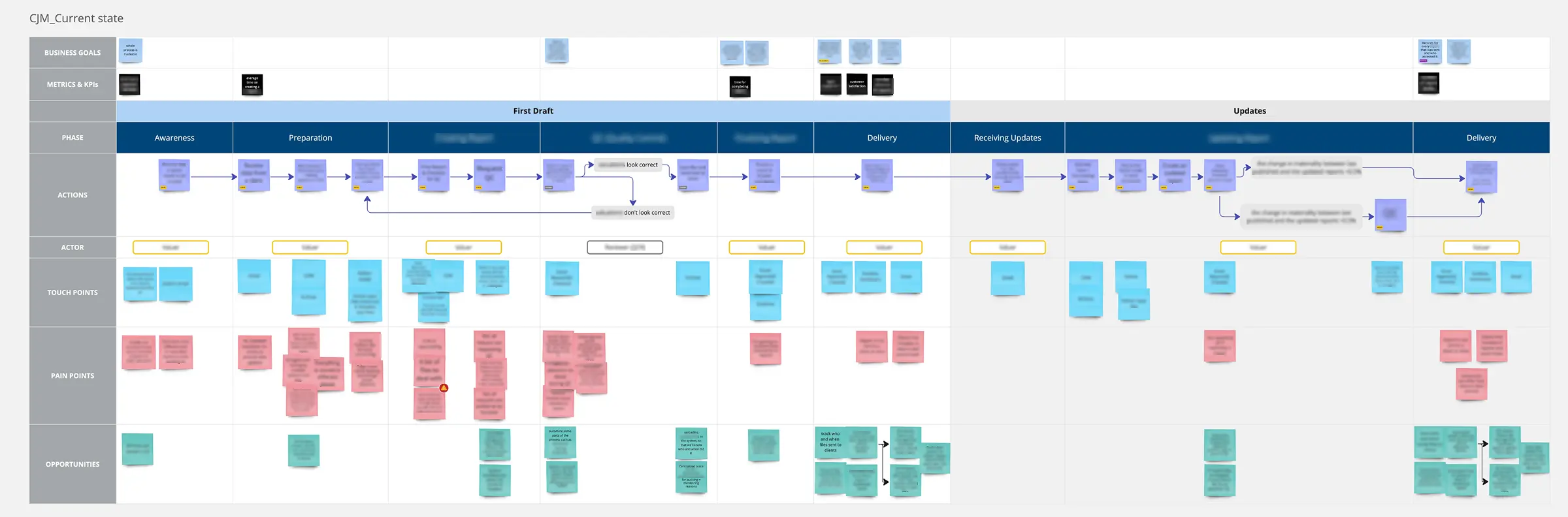
Customer journey map visualizing user steps, touchpoints, and pain points across the experience
Journey map revealed touchpoints and challenges across the experience
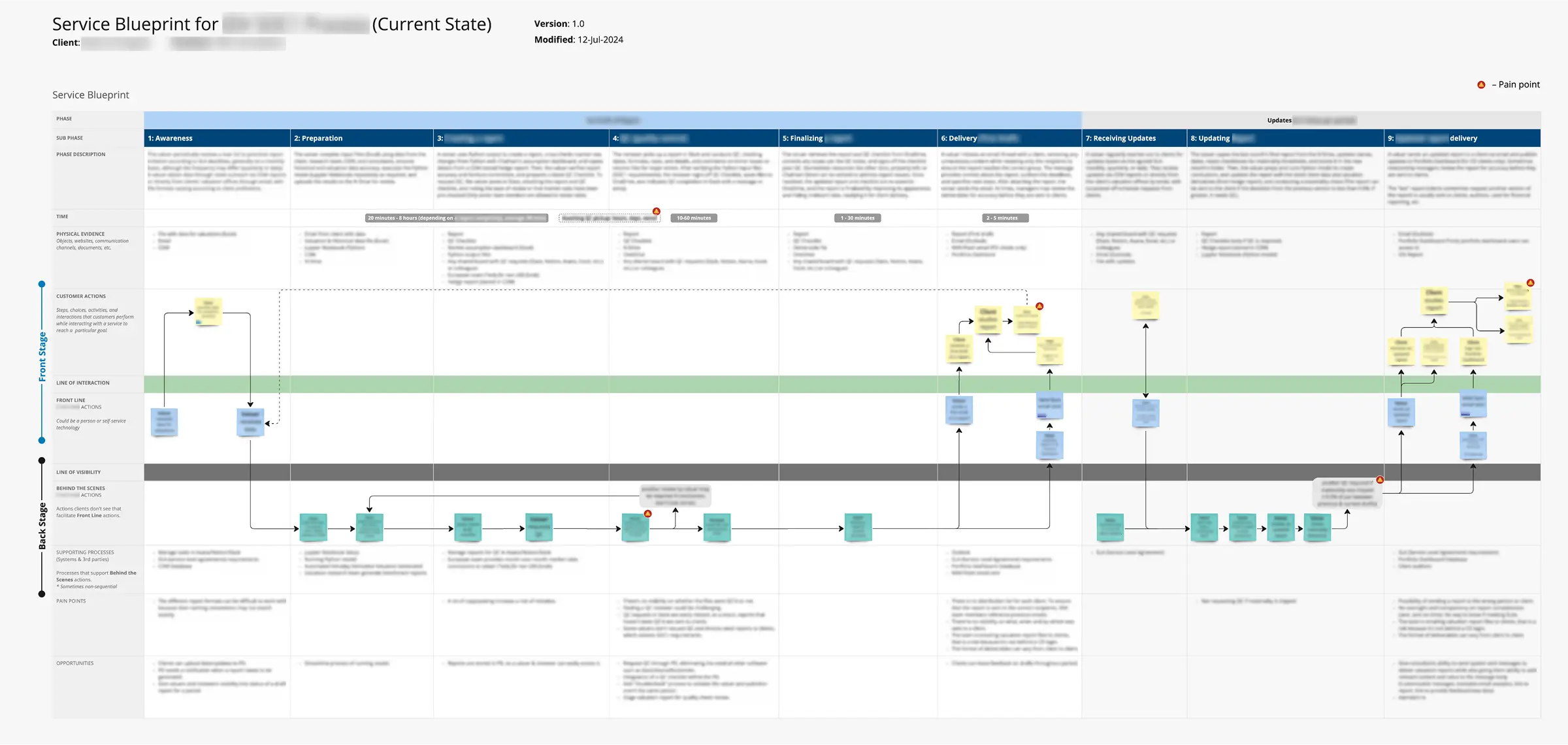
Current-state service blueprint showing frontstage and backstage interactions across the workflow
Current-state blueprint mapped the existing process and exposed gaps

Co‑creating with developers and visualizing the near‑term flow

To avoid exploring ideas that could never ship, we ran ideation sessions with developers alongside designers and subject‑matter experts. This helped:
Filter out concepts that were not technically feasible within our timeframe.
Refine promising ideas early so they fit within existing systems and constraints.
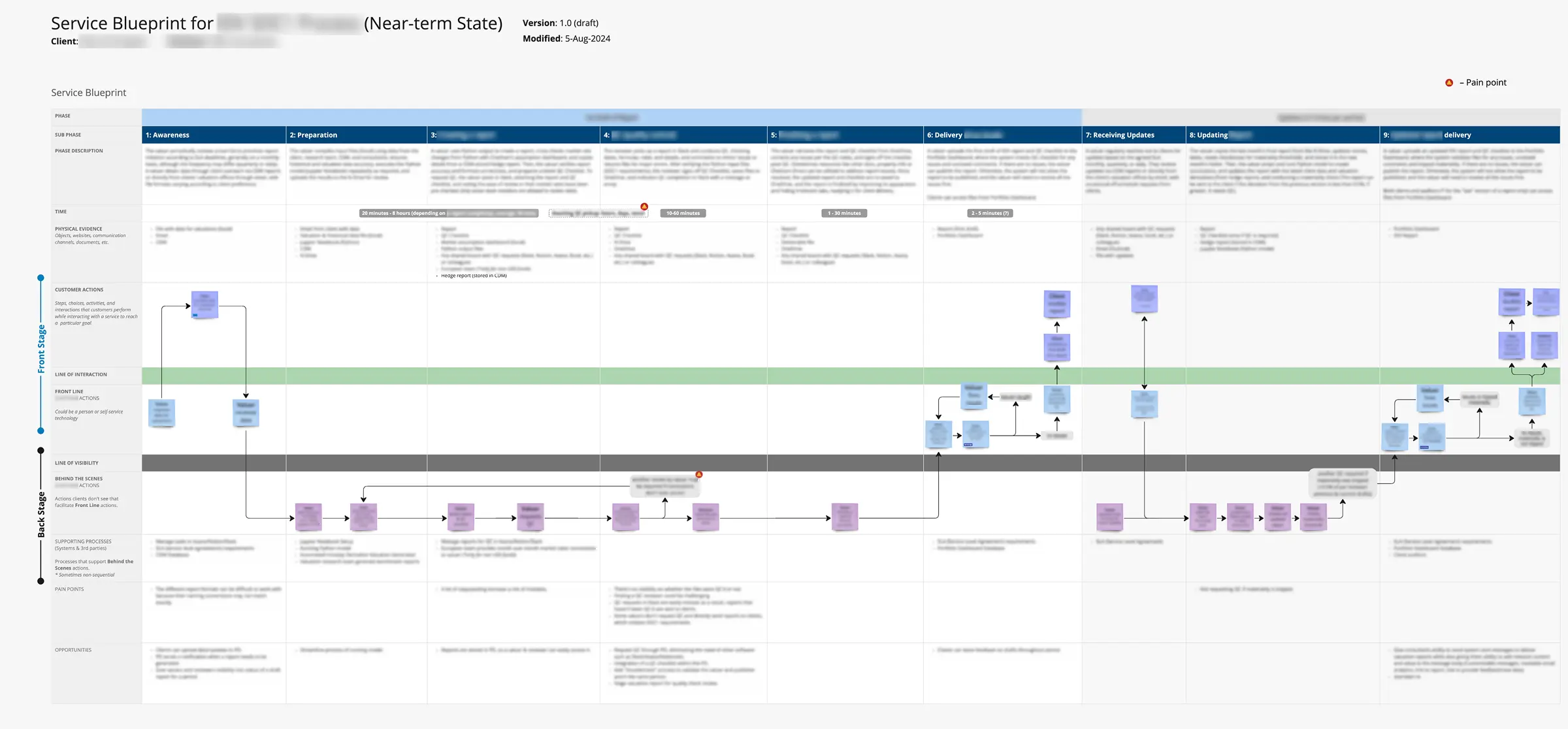
Before detailed design, I mapped a near‑term service blueprint (as of a defined target date) to show how the brainstormed solution would change the current workflow. This gave the team a clear picture of what “version one” would actually look like.
How Might We diagram capturing opportunity statements from user research
How Might We (HMW) statements framed research insights as opportunities for ideas
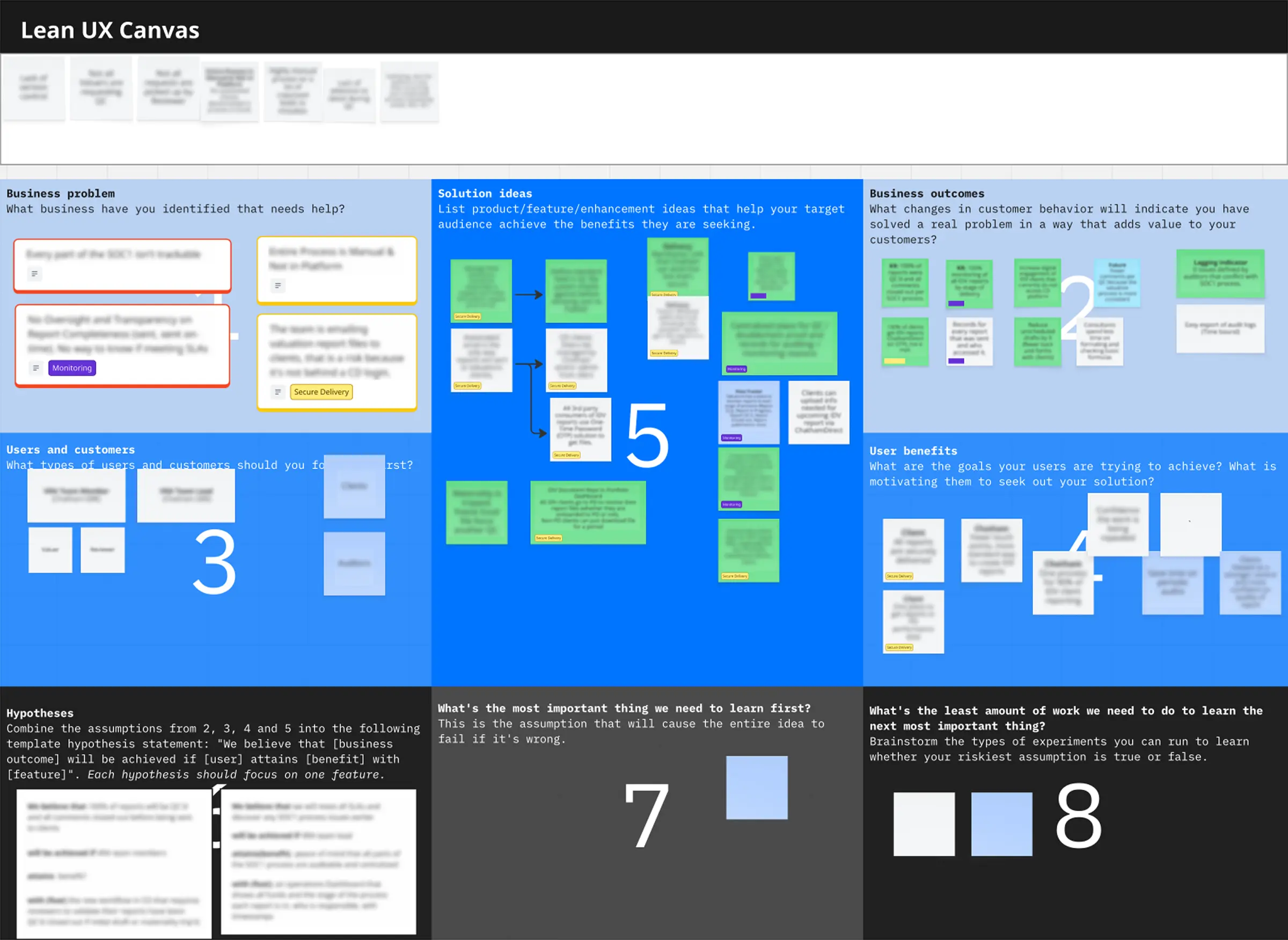
Lean UX canvas outlining assumptions, hypotheses, and success metrics for the project
Lean UX canvas captured early assumptions to guide design
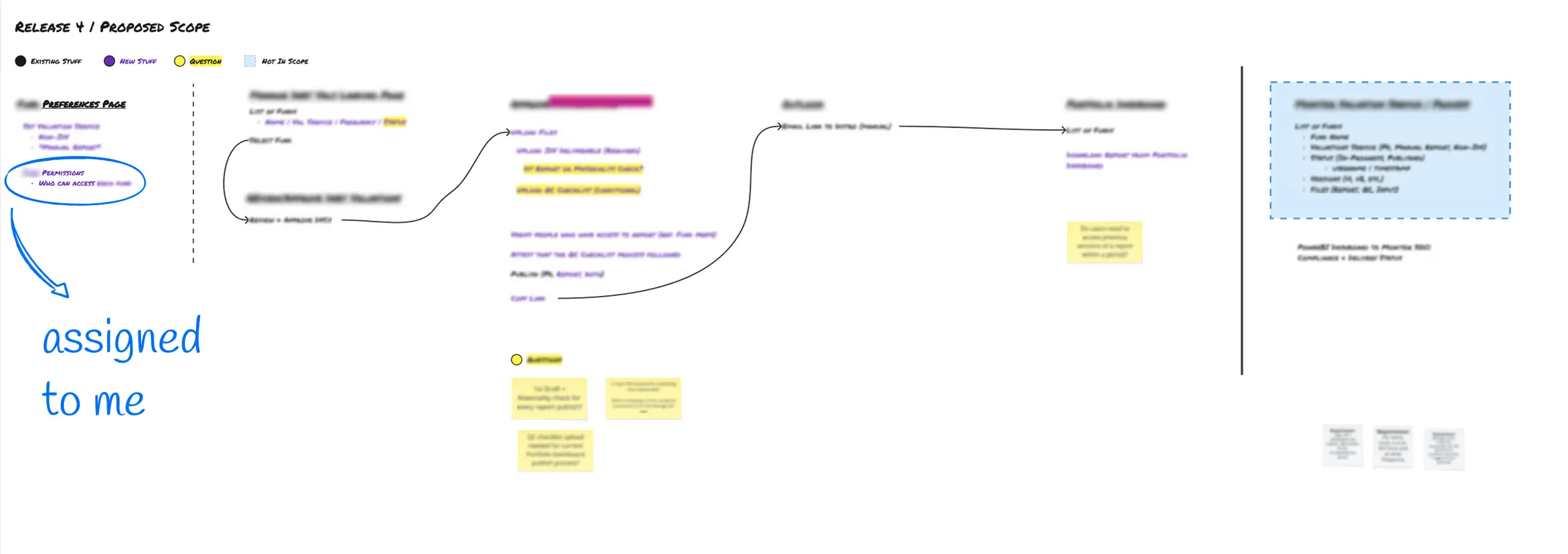
UX breadboard diagram showing screen flows and component relationships at a high level
UX breadboard outlined early flows and component relationships
Near-term service blueprint illustrating improved process with updated touchpoints and roles
Near-term-state service blueprint illustrated the improved process

Testing ideas early with SMEs and team members

Throughout the project, we held frequent feedback and usability sessions with subject‑matter experts and internal team members. These sessions were used to:
Check whether our design concepts matched how people actually worked.
Catch confusing flows or missing steps early.
Iterate on the access‑management prototype and workflow changes before development.
Regular validation kept the design grounded in reality and built confidence in the final direction.

1. Platform integration & workflow controls

Centralized uploads and history

We introduced a partial migration of the process into an internal platform, focusing on intake, organization and verification:
Team members now upload documents into a single place instead of scattering them across different locations.
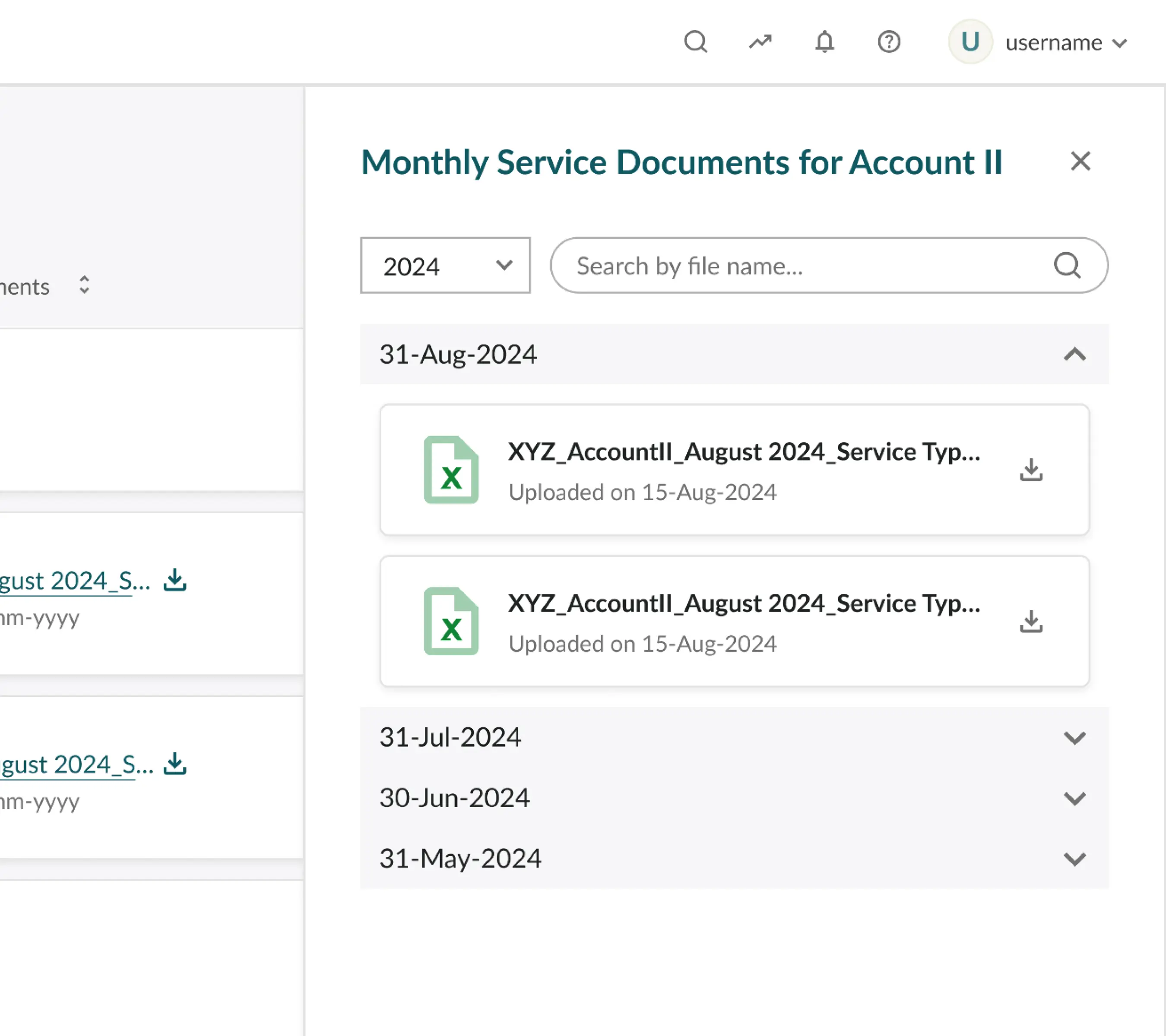
Leads can see a history of uploads for each case, including who uploaded what and when.
This created a clearer picture of progress and made it easier to answer “who did what when” questions.
Account repository view showing linked files and upload dates
Repository view displaying files linked to an account with addition dates

System‑assisted checks before progression

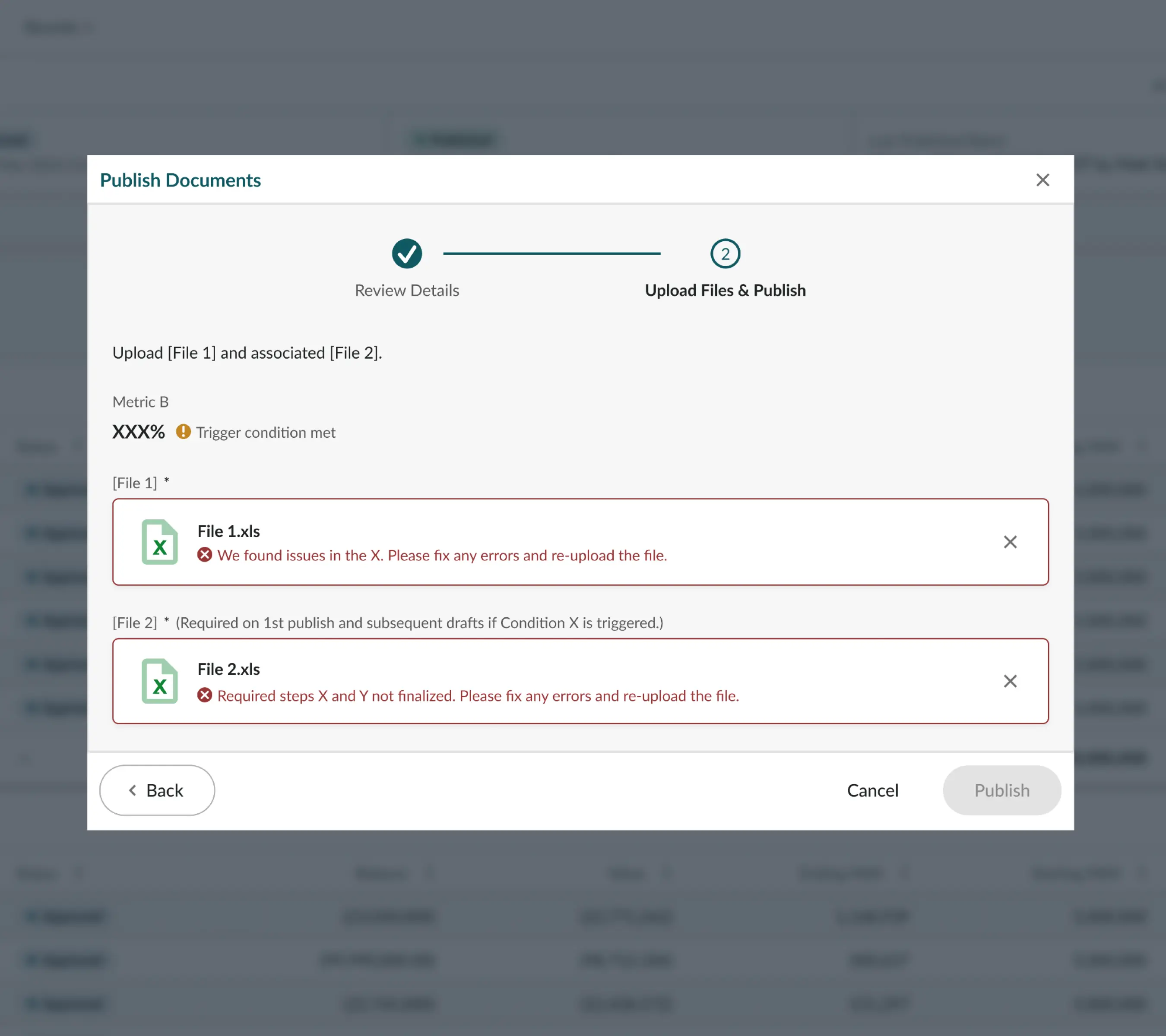
The platform adds an extra check before work can move forward:
Confirms that required documents are present.
Flags potential issues, such as missing files or obvious mismatches.
Ensures an initial review has been marked complete.
If these conditions are not met, the system prevents the team from proceeding, turning previously manual guardrails into more reliable ones.
Document upload validation screen checking required files and flagging errors
Upload step where the system checks required documents and flags issues before files move forward

Visibility into key dates

The interface highlights relevant service periords so the team can quickly see which cases need attention, helping to avoid missed timelines.
Together, these changes improved organization, accountability and confidence in the process, while still fitting into existing ways of working.

2. Access management

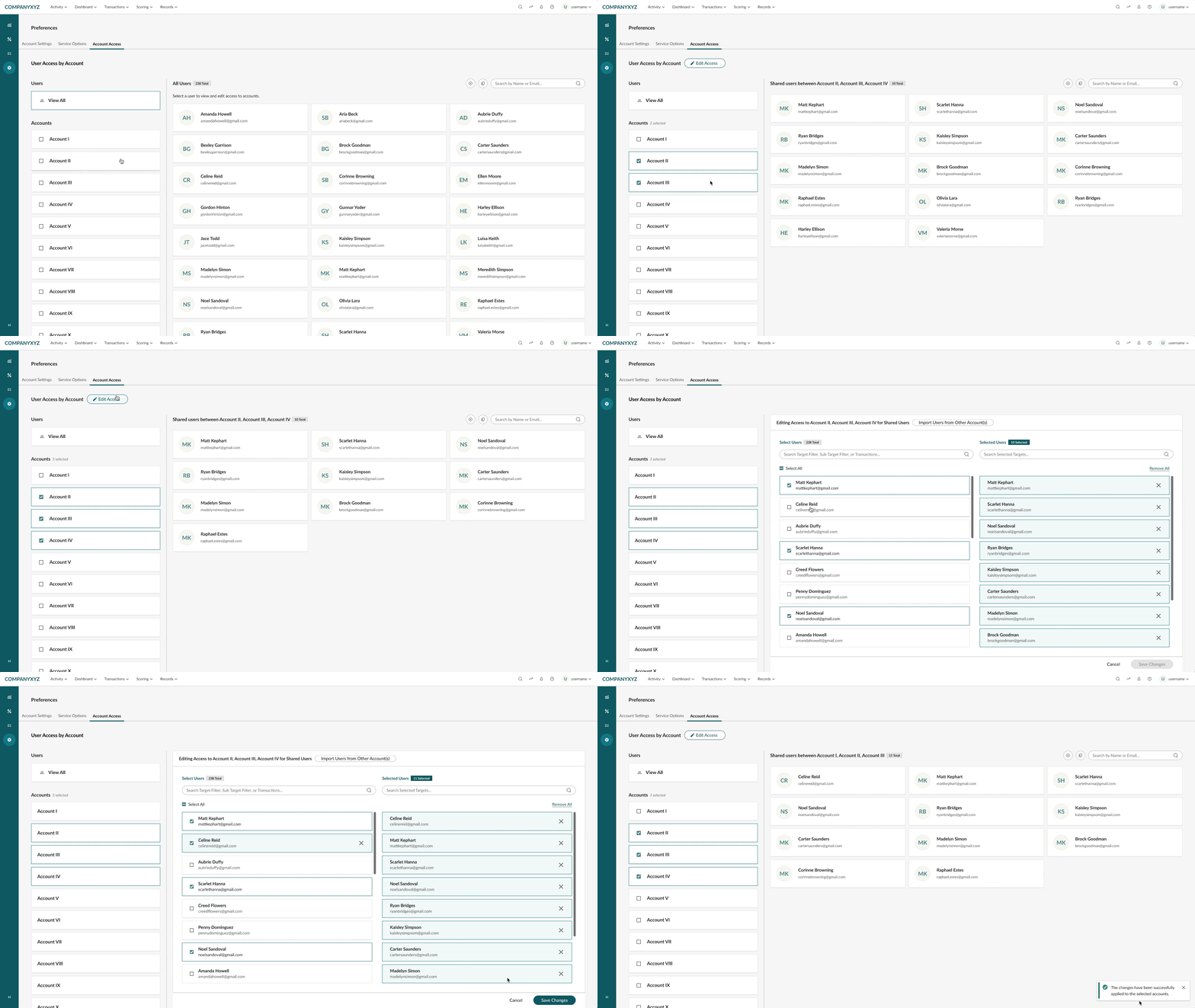
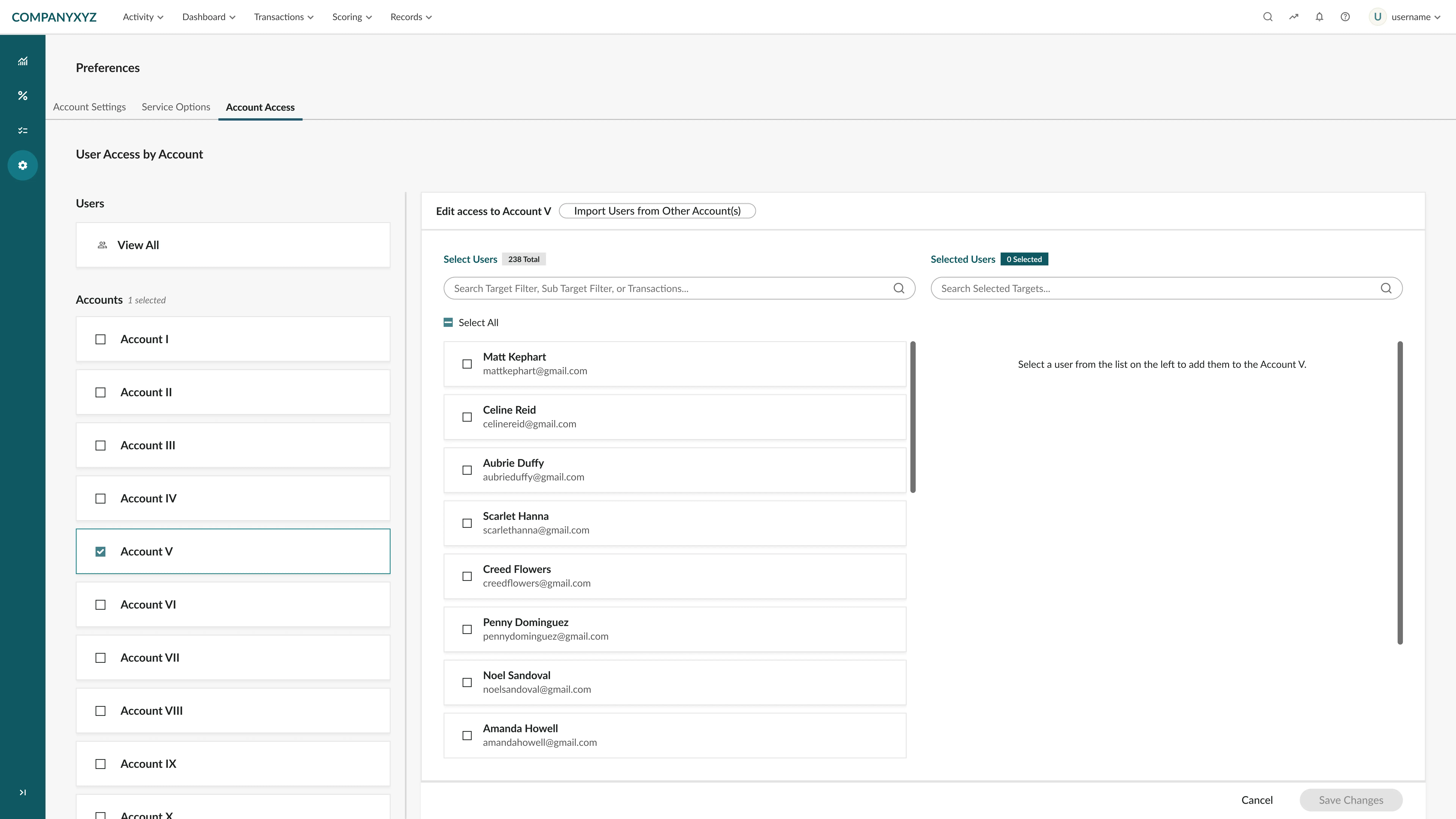
To move the workflow onto the platform and scale to more users, we needed a way to control who could access which financial accounts. I designed an access management system with four core capabilities:

Flexible editing

Allow granular changes to a single account or bulk updates across several accounts.
Interface for editing a single account's settings
Use bulk edit to add or remove people across multiple accounts in a single action
Animated demonstration of bulk editing to add multiple new users to accounts
Manage permissions at the single‑account level when a targeted edit is required

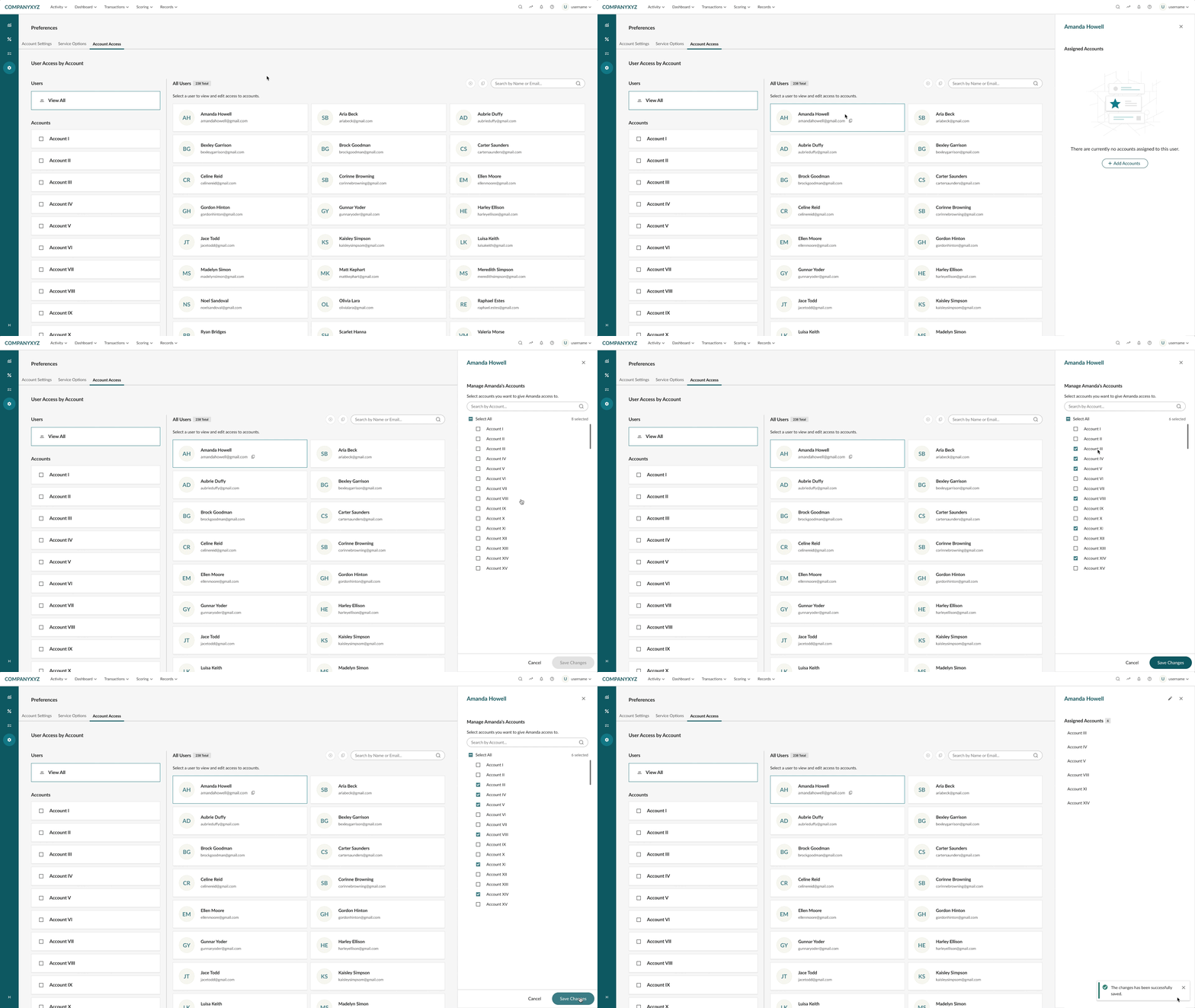
Quick profile view

Show, at a glance, which accounts a person can access and allow adjustments from one place.
Animated demonstration of profile view displaying all accounts associated with a user and available access controls
Profile view showing all accounts linked to one person, with quick access controls

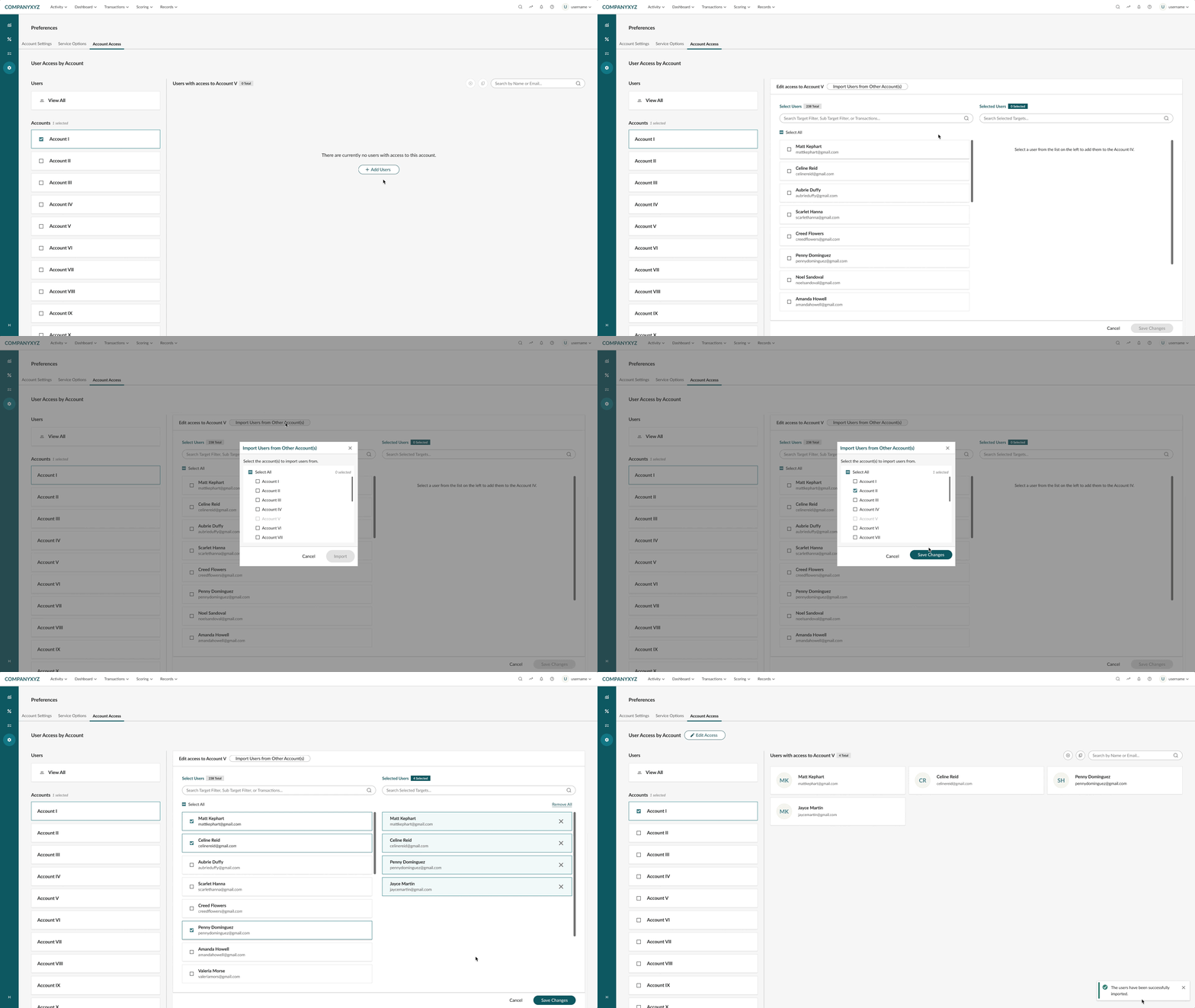
Import users between accounts

Reuse access setups from one account to another so new accounts can be configured quickly.
Animated demonstration of importing users from one account to another
Copying an existing access setup to a new account to speed up configuration

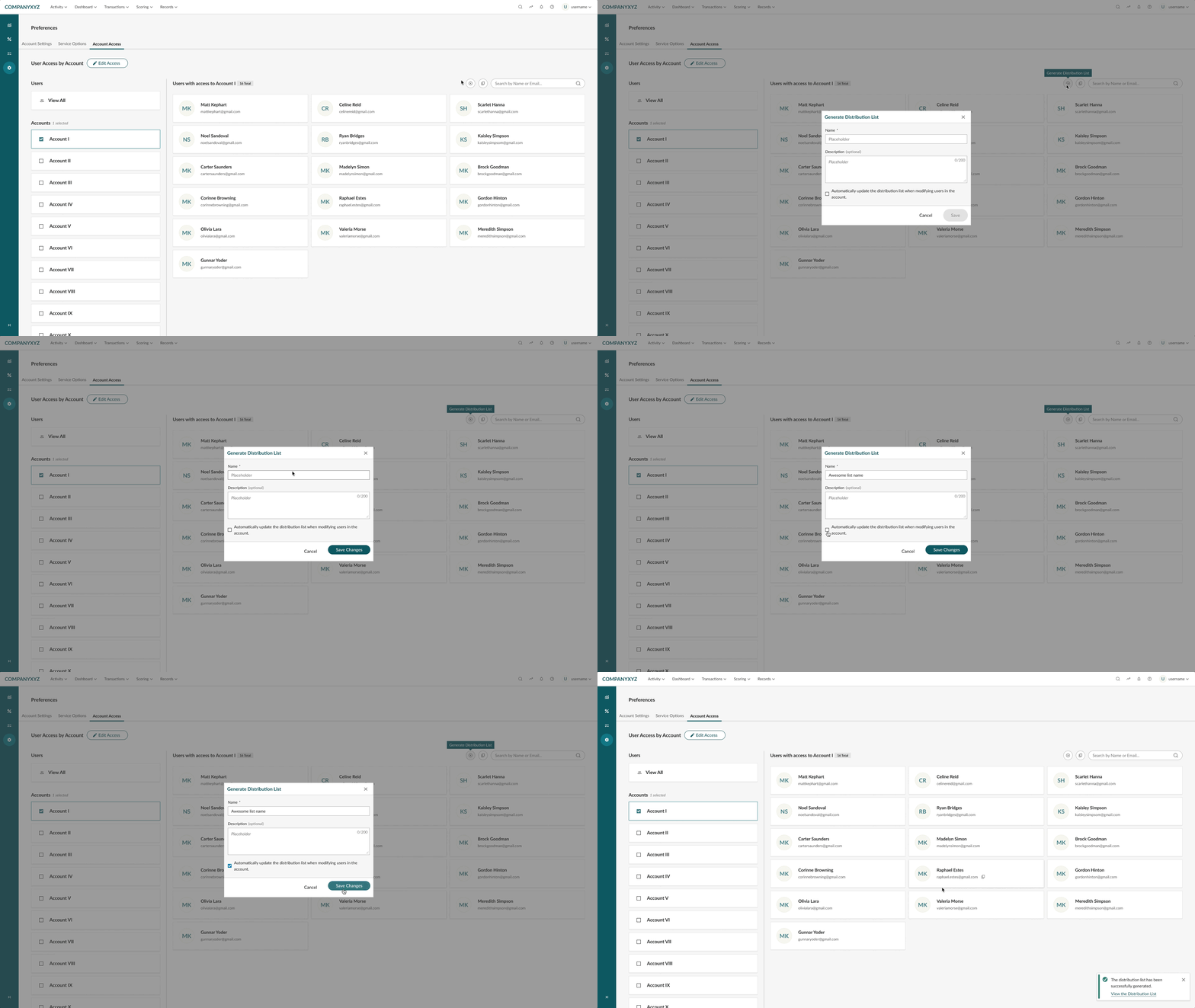
Convert existing account access into distribution lists

People who already had account access became ready-to-use groups for sending documents. This eliminated manual list-building and reduced errors during time-sensitive deliveries.
Animated demonstration of converting access accounts into a distribution list
Using current account access as a ready‑made delivery list for documents

Clearer process, stronger foundation

Shared understanding
The current‑ and near‑term service blueprints became central alignment tools, helping the team and stakeholders identify and prioritize workflow gaps
Improved accountability and organization
The new platform‑based flow increased traceability and gave leads better visibility into who uploaded which documents and when
Stronger controls, future‑ready
By centralizing uploads and adding checks, the solution reduced process risk and set up the organization to move more of the workflow into the platform over time
Strategic asset in access management
The access‑management concept received positive feedback from internal teams and is being used as a reference for future platform work

What did I learn from this work?

Learning a complex domain fast
This project showed me how powerful service blueprints are for both learning a new domain and aligning a cross‑functional team. Mapping the current state gave me a structured way to understand a complex service and gave the team a neutral artifact to rally around.
Designing with engineering from day one
Bringing engineers into research and ideation paid off: they raised technical questions early, kept ideas grounded in what was feasible, and made the handoff smoother because they were already invested in the decisions.
Principles to carry into future projects
This work reinforced a few principles that apply to other complex, regulated projects:
In complex environments, delivering a focused, high‑impact slice with strong guardrails is often more valuable than trying to redesign everything at once.
Systems‑level artifacts like blueprints are active tools for prioritization and risk reduction, not just documentation.
Collaboration shapes outcomes as much as design does. Aligning designers, engineers, and experts early leads to better decisions.

I'm just an email away

If you’d like to chat or collaborate, feel free to reach out :)